

A modern two-component water-based finish holds up best. It cures harder than oil-based polyurethane, stays clear instead of yellowing, dries fast enough to finish a floor in three days, and its low odor matters in a house that stays closed up for eight rainy months. Oil-based polyurethane still wins on one thing: the warm amber tone it gives red oak. You can get most of that look with a sealer or a light stain under a water-based top coat. Every Wills Flooring refinish is three coats of Bona water-based finish, and that is what the $3.99 per sq ft natural rate buys.
Sammamish is full of 1990s and 2000s plateau homes in Klahanie, Trossachs and Sahalee with 2,000 sq ft of builder red oak on the main floor, finished at construction with oil-based polyurethane. Thirty years later it has gone orange, and the owners ask a question they read on Reddit: "everyone says oil is more durable, so why does every contractor push water-based?" The durability argument was true in 1995 and is not true now, and the Pacific Northwest climate tips every other factor the same way.
The two finishes, side by side
| Property | Two-component water-based | Oil-based polyurethane |
|---|---|---|
| Hardness and scratch resistance | Highest of any site-applied finish once cured | Good; stays slightly soft for weeks |
| Color | Clear, and stays clear | Amber on day one, deeper every year |
| Dry time between coats | 2 to 3 hours | 12 to 24 hours, longer when damp |
| Coats in a standard job | Three | Two to three |
| Walk in socks | 24 hours | 48 hours |
| Full cure | About 7 days | About 30 days |
| Odor and VOCs | Low; most families stay in the house | Strong solvent odor; leave for several days |
| Future recoat | Screen and recoat at $1.99 per sq ft | Also possible, after a thorough screen and adhesion test |
Two-component means a hardener is mixed into the finish on site. That is the product class Bona Certified Craftsmen use, and it is not the same as the single-part water-based finish sold at a hardware store.
Why the oil-is-tougher opinion is stuck in the 1990s
The first water-based finishes earned the reputation
Early single-component water-based products were thin, went on milky and scratched easily. Anyone who had one applied in 1995 learned to distrust the category. Those products still exist on the retail shelf, which keeps the story alive on forums.
Two-component changed the math
Modern commercial water-based finishes cross-link with a hardener and outperform oil-modified polyurethane in abrasion testing. They are what get specified for restaurants, retail and gym floors now. The finish we apply on a Sammamish family room floor is the same chemistry.
Oil stays soft for a month
Oil-based poly is walkable in two days but keeps curing for thirty. Furniture legs, dog nails and rug pads mark it during that window. Water-based reaches most of its hardness in a week, which is why furniture goes back on day three without leaving dents.
Durability is mostly technique
A finish is only as good as the sanding under it and the thickness applied. Three even coats of a high-solids water-based finish, screened between coats, outlasts two rushed coats of anything. That is where certification and crew experience show up.
The Pacific Northwest factor
- Humidity stretches oil dry times. At 55°F and 60 percent humidity, a normal Sammamish day from October to April, oil-based poly can take two full days per coat. A three-coat job becomes a week, with the house smelling of solvent the whole time. Water-based dries in hours regardless.
- You cannot ventilate in the rain. Oil-based finish wants open windows for days. In a closed-up PNW winter house, the fumes have nowhere to go. Low-VOC water-based lets most families sleep in their own beds that night.
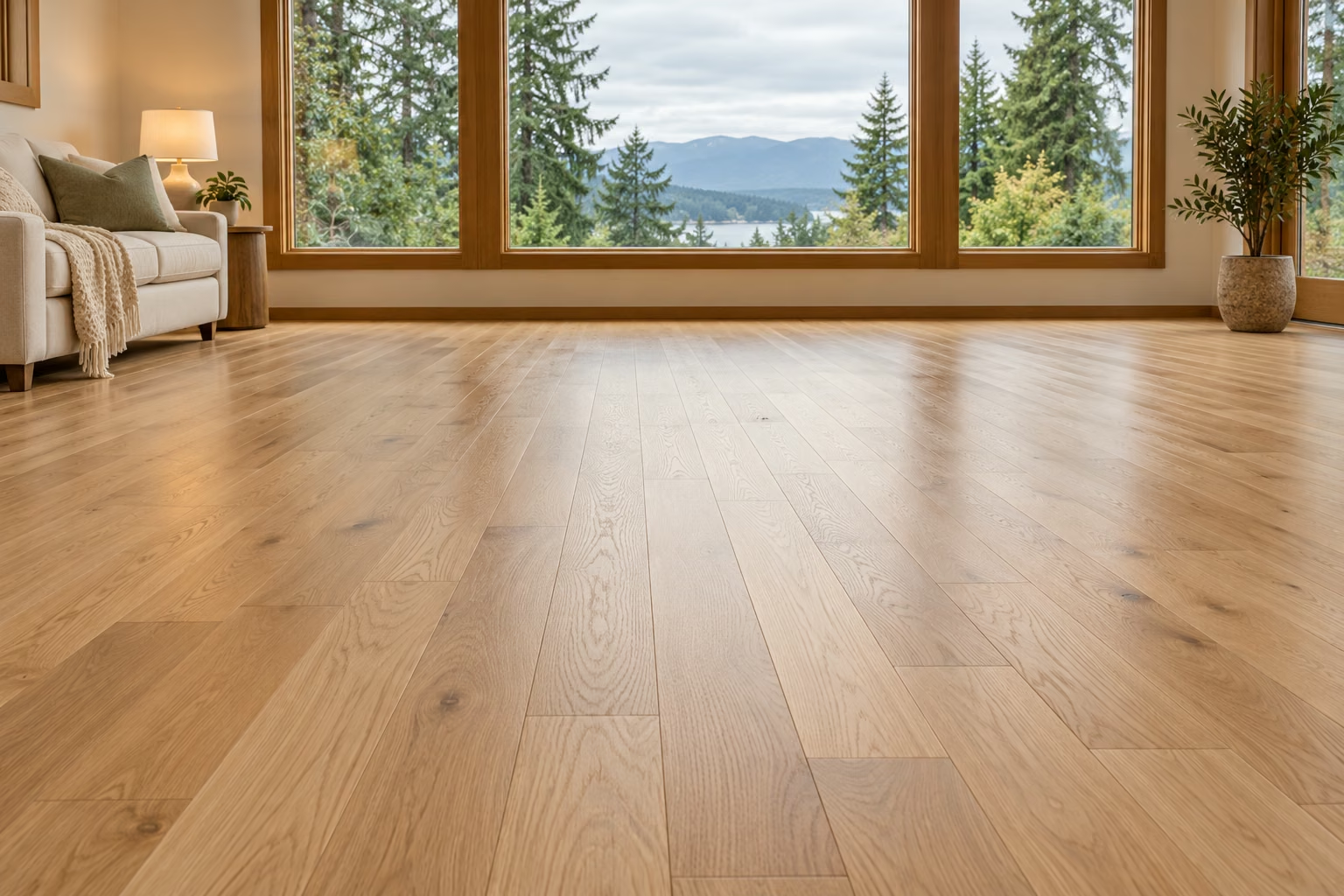
- Dark winters want light floors. Amber deepens a room that already gets six hours of gray light. The clear finish keeps white oak pale and red oak honest, and the light Scandinavian look Sammamish buyers want is only possible with water-based.
- Seasonal movement. Plateau homes swing from damp winters to dry, air-conditioned summers, and the boards move. Water-based finish flexes with that movement; brittle oil films can craze at the seams over many cycles.
- Mud and dogs. Wet grit is sandpaper on any finish. The harder cured surface of a two-component water-based coat, in a matte sheen, hides the daily abuse of a wet Lab better than a glossy oil floor.
Price your Sammamish refinish
Refinishing Calculator
Real Wills Flooring pricing. Pick the service, enter your area, and see the number before anyone visits.
A 2,100 sq ft plateau main floor sanded and finished natural is 2,100 × $3.99 = $8,379. If you want a warmer or lighter tone, sanding, staining and finishing is 2,100 × $6.50 = $13,650. Either way, when the traffic lanes dull in six or eight years, a screen and recoat on the same floor is 2,100 × $1.99 = $4,179, and a water-based floor recoats without the color shift an oil floor would show.
Getting the warm look without the oil
Natural water-based
Choose clear when
- White oak, maple or ash, where you want the pale wood to stay pale
- You are going for a light, modern floor that brightens winter
- Red oak you are fine seeing in its natural pink-tan tone
- You want the recoat in eight years to match exactly
Amber sealer or light stain
Choose a toned base when
- Red oak you want to read as warm honey, like the original oil finish did
- Matching adjoining rooms that still have an aged oil-based floor
- Craftsman-style interiors with warm trim and cabinetry
- You want the warmth to stay put instead of deepening every year
Already have an oil-based floor? A water-based recoat can go over cured oil-based poly after a thorough screening and an adhesion test patch. The existing amber stays, the yellowing stops, and you avoid a full sand. If a wax or polish was ever used on it, the recoat is off the table until it is stripped, so tell us the floor's history.
When oil-based or hardwax oil still makes sense
- Matching an existing oil floor room by room. If you are only doing the dining room this year and the living room oil floor stays, a toned water-based finish gets close, but an exact match sometimes means staying with oil.
- Period restorations. A 1910 farmhouse with original fir and a deliberate amber patina can justify oil for authenticity, accepting the dry time and fumes.
- Hardwax oil on wire-brushed white oak. Penetrating oils give a matte, natural look and can be spot repaired, but they need re-oiling every year or two in a busy house. Right for a careful owner, wrong for a family with three kids and a dog.
- Not for durability. If someone tells you oil is the tougher choice for a Sammamish family home, ask which product and when they last used a two-component water-based finish. Our refinishing page lists exactly what we apply and why.
Finish questions from Sammamish homeowners
Usually asked while looking at an orange 1990s red oak floor.
Is water-based polyurethane as durable as oil-based?
Does water-based finish turn yellow over time?
How long does water-based finish take to cure in the Pacific Northwest?
Can you put water-based finish over an old oil-based floor?
Which finish is best for a house with dogs?
Why does Wills Flooring use Bona water-based finish?
See a water-based sample on your own floor
Free in-home estimate anywhere in Sammamish. We bring finish and stain samples, test your current finish, and hand you a firm written price on the spot.
Wills Flooring serves Sammamish, Everett, Seattle, Lynnwood, Edmonds, Kirkland, Snohomish and the rest of Snohomish and King County from our Lynnwood showroom. See our hardwood refinishing in Sammamish, WA, hardwood refinishing service, published price list, matte vs satin vs semi-gloss sheen, what Bona Certified Craftsman means and maintaining a refinished floor.







.svg.svg)
.svg.svg)
.avif)