Free in-home estimateStart with your actual floor
Targeted repair optionsKeep what can be restored
Clear project scopeKnow what the repair includes
Local since 2013King & Snohomish counties
Straight answers before you book
Floor repair questions, answered
Can you repair one damaged plank without replacing the whole floor?
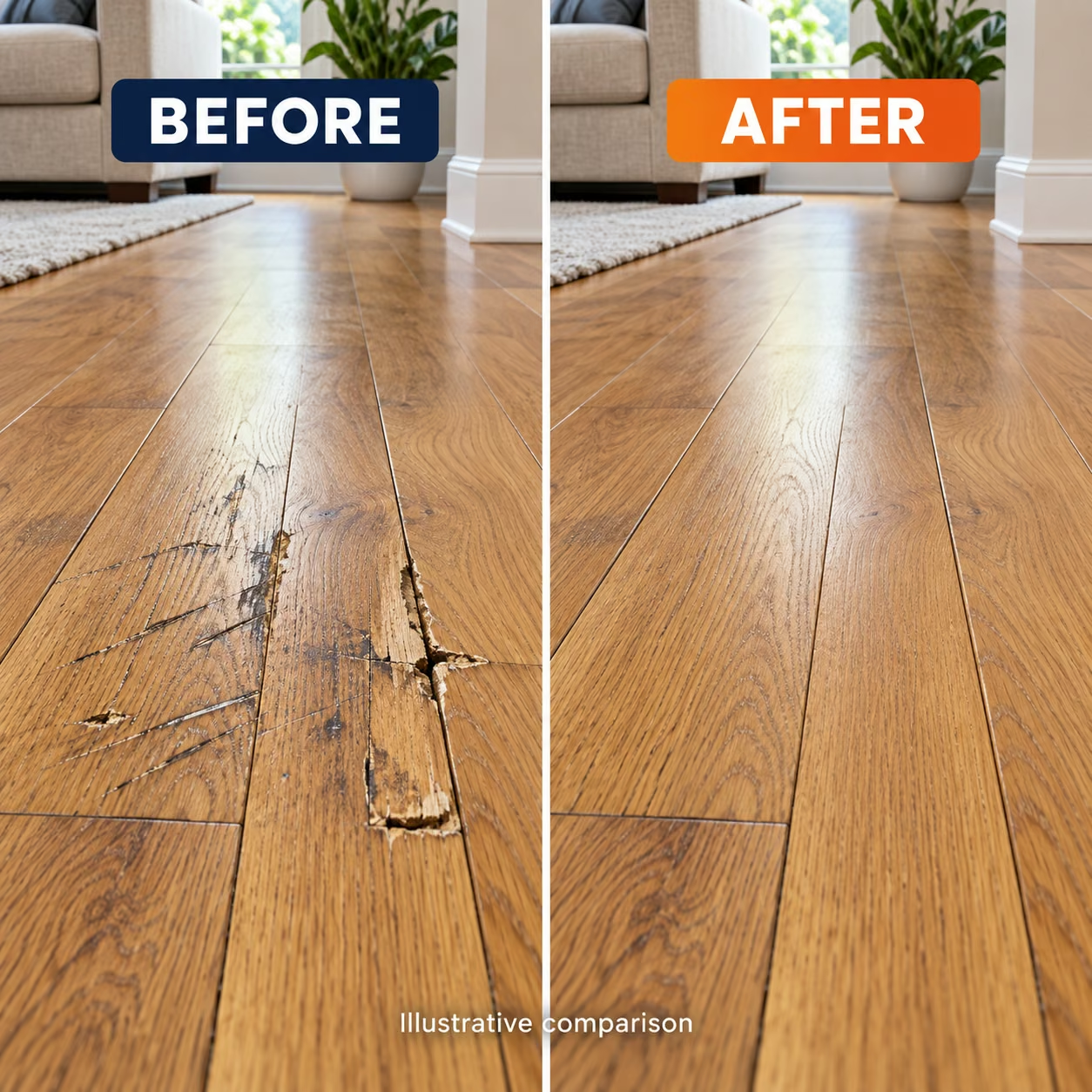
Often, yes. The repair depends on the flooring product, installation method, location of the damage and availability of a compatible plank. Some floating floors need surrounding rows lifted; other products allow a manufacturer-approved local replacement. An assessment establishes the practical scope.
Will the repaired area match the rest of my floor?
We aim for a close match, but an invisible repair cannot be promised. Age, sunlight, wear, wood grain, color and sheen can make a new piece look different. Spare boards from the original installation are helpful. For hardwood, discuss a stain sample and the proposed finishing boundary before work starts; refinishing a larger continuous area may improve consistency.
What if my flooring has been discontinued?
Save any spare planks, packaging and product labels, including the manufacturer, collection, color and product number. We can discuss whether compatible stock or another repair approach is practical. A similar color alone does not establish compatibility; dimensions, thickness and connection details also matter. If a suitable match is unavailable, replacing a larger area may be the better option.
Can water-damaged or cupped hardwood floors be repaired?
Possibly, after the moisture source has been addressed and the floor has been evaluated following drying. The remaining damage determines whether the floor can be kept, repaired or replaced. Sanding or covering an actively wet floor does not resolve the cause.
Can you sand prefinished or engineered hardwood?
Some prefinished wood floors can be sanded, but not every floor is a candidate. The remaining wood thickness, previous sanding, condition and product instructions matter. Engineered flooring requires a check of its real-wood wear layer. Laminate and vinyl are not sanded and refinished like hardwood.
Should gaps between wood floorboards be filled?
Not every gap needs filler. Wood changes size with humidity, so some seasonal gaps close on their own. Persistent or unusually large gaps need assessment. We discuss the cause before recommending filling or board repair.
Will a new finish stop my floor from squeaking?
A new finish does not fix the source of movement. Squeaks may involve flooring, fasteners or the subfloor. The repair method and access needed depend on where the movement occurs; a surface treatment alone may not solve it.
Can wrinkled carpet be restretched instead of replaced?
Restretching may help if the carpet and backing are in suitable condition. Padding, seams and anchoring also need inspection. Professional power stretching is different from simply pulling the edges tight with a knee-kicker; damaged backing or other issues may limit the result.
How much does floor repair cost?
We price the actual repair scope. Cost depends on material, damaged area, matching stock, preparation, access and finishing. A small patch may still involve setup and a minimum charge. Request a written estimate with inclusions and exclusions rather than relying on a room installation price.
How long does a floor repair take, and can I use the room?
Timing depends on the repair size, material availability, drying, adhesives and any finishing. Some localized repairs need less working time than a full-room project, but return-to-use timing is specific to the products used. Confirm furniture moving, room access and curing requirements before work begins.
What should I prepare for a free repair estimate?
Have close-up and wider room photos, the approximate damaged area, spare material and product details ready. Tell us about past leaks, previous repairs and any movement or noise. Share your address so we can confirm the visit and service area.
Can scratched hardwood be buffed and recoated instead of sanded?
A screen and recoat may suit light wear when the existing finish is intact and compatible with the new coating. It refreshes surface protection without sanding back to bare wood. Deep scratches, bare patches or a stain-color change may require full refinishing if the wood has enough usable thickness. Damaged or loose boards need a separate repair assessment.
Does dustless sanding mean there will be no dust?
Dustless sanding uses dust collection to reduce the mess during hardwood refinishing. It does not mean zero airborne dust. If sanding is part of your repair, ask us about containment, protection of nearby rooms, cleanup and ventilation. Finish drying and curing requirements still apply after the sanding is complete.
How should I compare floor repair estimates?
Ask each contractor to quote the same damaged area and repair method. Compare matching materials, removal, preparation, labor, any minimum charge, the area to be refinished, cleanup and applicable taxes. Also confirm exclusions, warranty terms and when the room can be used again. Photos of similar repairs can help you discuss realistic expectations for the finished appearance.
Further reading: NWFA refinishing guidance · Shaw plank replacement guidance · Carpet and Rug Institute restretching guidance. The instructions for your specific flooring product govern the repair method.