
Ceramic tile
Explore color, pattern and texture for floors, walls and backsplashes. Confirm that the specific tile is rated for the location and expected use; wall-only tile is not a floor tile.
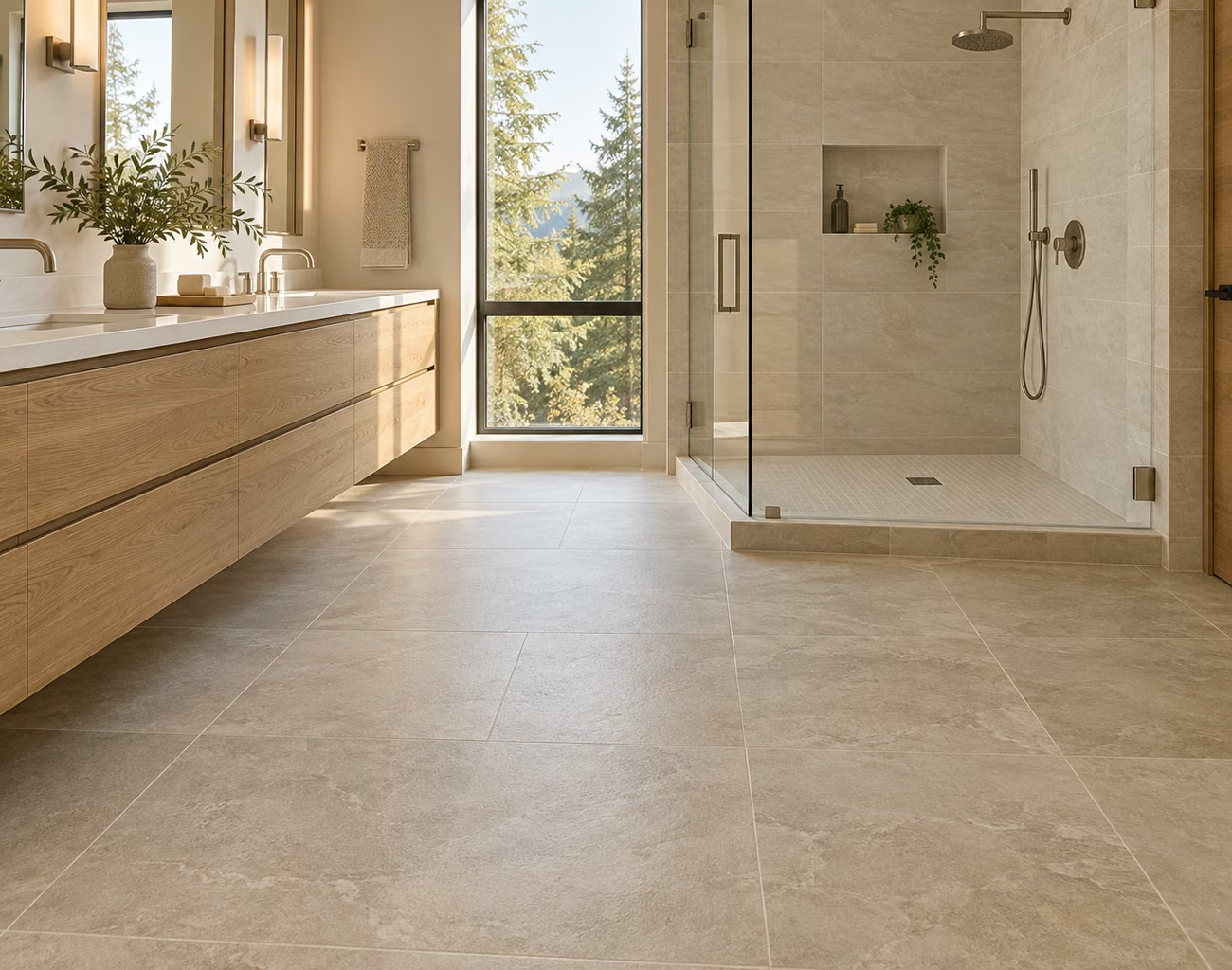
Tile installation in Redmond, Washington
From a focused bathroom refresh to a kitchen floor replacement, your Redmond tile project should begin with a clear scope. We help compare materials and layouts while reviewing the surfaces and adjoining finishes already in the home.
Wills Flooring helps homeowners in Redmond choose ceramic, porcelain or stone tile and understand the installation beneath it. Review removal, preparation, grout and finishing details in a written estimate before the work begins.

Choose for the room you’re creating
Start with how the room will be used, then choose the look. Surface texture, care needs, format and the installation system matter alongside color.
Samples from our tile collection
See the details up close, from classic herringbone to bold mosaics. Select a sample to explore the product, then discuss availability and suitability for your room with our team.

MSI · Honed marble
View tile
MSI · Matte porcelain
View tile
MSI · Glossy ceramic
View tile
MSI · Glass mosaic
View tile
MSI · Polished marble
View tile
MSI · Matte porcelain
View tile
MSI · Polished marble
View tile
MSI · Polished marble
View tileFrom everyday rooms to distinctive details
Coordinate floors, wall tile, backsplashes and decorative accents. Review the requirements for each surface so the finished design works as well as it looks.
Find your direction
Explore tile inspiration from our existing collection, then compare samples in your own space. The same finish can feel different with your lighting, fixtures and cabinetry.



Oleg started Wills Flooring in Lynnwood in 2013. Today, our family-owned business serves homeowners across King and Snohomish counties from our Everett showroom.
Have a question about your tile selection, estimate or schedule? Call (425) 350-4435 or email info@willsflooring.com. Confirm your project contact before work starts.
Meet Wills Flooring ↗Request the written one-year workmanship warranty coverage, exclusions and claim instructions for your tile installation with your estimate. Workmanship coverage and any manufacturer product warranty are separate.
Washington contractor registration WILLSFS794CB, under WILL'S FLOORING SPC. Check the official record for current registration, bond and insurance information.
Verify Wills Flooring with Washington L&I ↗Preparation is part of the finished result
If a Redmond remodel includes large-format tile, review substrate flatness and the proposed pattern early. The position of doorways, cabinets and fixtures affects the layout; a larger tile does not remove the need for careful preparation.
We discuss demolition, repairs, underlayment and transitions in the estimate. Movement joints also need planning; they allow the assembly to accommodate movement rather than relying on grout alone.
For larger tiles and detailed patterns, layout and surface preparation become especially important. Review the starting point, visible cuts and grout lines before installation begins.
Read TCNA guidance on movement joints →
A clear process, from selection to cleanup
We review your rooms, address and timing in Redmond, then document material choices, preparation and access before work begins.
Share your rooms, inspiration and timing. We measure the area and discuss the existing floor, access and your material preferences.
Review tile size, pattern, grout color, joint spacing, edges and transitions. Confirm who supplies the tile and setting materials before purchasing.
The agreed scope may include demolition, removal, repairs and a suitable underlayment or membrane. Preparation follows the selected installation system.
Layout, cutting and setting are coordinated with the room. Grouting, flexible joints and sealing where required complete the specified finish.
Mortar, grout, sealants and waterproofing products have their own curing requirements. Confirm room access and any testing before the installation is put into service.
Walk through the installation and cleanup. Keep care instructions, product details and spare tile for future maintenance or repairs.
For bathrooms and other wet areas
A tiled shower needs waterproofing beneath the finish, with compatible details at seams, corners, penetrations and the drain. Tile and grout alone are not that barrier.
Ask which waterproofing system is included, how it connects at each detail and what testing is required before tiling. Plumbing changes, electrical work and any permits should be identified separately.
Read manufacturer guidance on shower waterproofing →The appropriate system depends on the room, substrate and selected products. We confirm the installation scope for your project.
Compare the full installation
Your Redmond estimate depends on the measured area, tile format, pattern and existing conditions. Removal, preparation, waterproofing, access and finishing details affect the complete price alongside the tile itself.
Tile can offer long-term value, but it is not automatically less expensive than hardwood or other flooring. Compare complete installation estimates for the same room and scope.
Made for everyday living
Many ceramic and porcelain floors are straightforward to maintain with regular removal of loose dirt and a suitable cleaner. Follow the tile and grout manufacturers’ care instructions, including any sealing requirements.
Stone and specialty finishes may need a different routine. Tile also feels firm and can feel cool underfoot. If warmth is a priority, discuss a compatible floor-warming system while planning the project.
Choose a look you love and a care routine that fits your household. Good installation and maintenance support the floor’s long-term performance; no tile is immune to impact damage.
DIY or professional installation?
Accurate cuts and a balanced layout are only part of the job. Preparation, bonding, joints and wet-area details can be difficult to correct once the finish is installed.
A professional estimate helps you understand the full scope. If you already have tile or grout, share the product details before ordering the rest so suitability and quantities can be reviewed.
Explore TCNA installation guidance →Local tile installation
Share your Redmond project address, room photos and preferred tile style when requesting an estimate. Our team will review the scope, access and scheduling with you. Explore nearby tile services below.
Also planning softer flooring for another room? Explore carpet installation in Redmond →
Helpful answers before you start
Check the room dimensions, product requirements and the condition of the substrate before ordering. Discuss flatness, layout, joint spacing and visible cuts. The preparation and setting materials must suit the specific tile and application.
The scope can include removal of the old surface, preparation, underlayment or membranes, layout, cutting, setting, grouting, required sealing and cleanup. Materials, waterproofing, trim, disposal and any repairs should be identified in your written estimate. Plumbing and electrical changes are separate unless explicitly included.
Choose the specific product for the room and how it will be used. Both categories offer many styles, but not every tile is approved for floors or wet locations. Compare floor-use suitability, traction, maintenance, appearance and the full installed cost.
Tile and grout alone do not create a waterproof shower assembly. A wet-area installation needs an appropriate waterproofing system with properly detailed seams, corners, penetrations and drain connections. Grout sealer is not a substitute for that system.
Sometimes, but it is not an automatic shortcut. The existing assembly must be suitable and securely bonded, and the selected installation products must allow it. Added height, weight, transitions, doors and moisture conditions all need review. Covering loose tile or an unresolved failure can carry the problem into the new floor.
The complete floor assembly needs review. Subfloor condition, structural support and the chosen tile and underlayment system determine the preparation. A membrane or backer board does not correct an inadequate structure. We discuss the necessary preparation before quoting the finished tile work.
Larger tiles make unevenness and edge differences more noticeable. Surface flatness, tile variation, layout and mortar support must be considered together. Tile leveling clips help align edges during setting; they do not replace proper substrate preparation.
A close color match creates a quieter look, while contrast emphasizes the tile pattern. Joint width must suit the tile dimensions, variation and product instructions. Rectified tile still needs appropriate joints. We discuss grout type, maintenance and flexible joints as part of planning.
The price depends on tile selection and size, square footage, pattern, preparation, demolition, waterproofing, trim and access. A shower or detailed backsplash is not priced the same way as an open floor. Request an itemized estimate that separates material, labor and preparation.
Follow the actual mortar, grout, waterproofing and sealant instructions for your project. Installation time and return-to-use time are different. Temperature, humidity and product selection affect curing, so confirm the schedule before arranging furniture moves or using the room.
It depends on the material. Many glazed ceramic and porcelain surfaces do not require sealing, while some stone, unglazed tile and grout products have specific requirements. Follow the tile and grout manufacturers’ guidance. Sealing does not make the whole assembly waterproof.
Tile can be used with a compatible floor-warming system when the complete assembly follows the manufacturers’ instructions. Plan the system, floor height and controls before installation. Electrical connections and any permit requirements should be assigned to the appropriate qualified professional.
Yes, we can discuss installation of owner-supplied materials. Have us review the exact tile and grout before ordering, including suitability, quantities, trim and lead times. Confirm responsibility for shortages, defects and extra material for cuts or future repairs in the estimate.
For product-specific care, see Daltile’s ceramic and porcelain maintenance guidance. Always follow the instructions for the tile, grout and installation products selected for your home.
Compare tile samples, discuss your Redmond rooms and get a clear installation estimate from Wills Flooring.
Real feedback from customers across Everett, Seattle, Bellevue and nearby communities.

Outstanding in every respect with a beautiful outcome. Highly recommend for hardwood floor refinishing.

These guys are it. Speed, quality, price. The HPL floors they have are super strong and awesome looking.

Wills Flooring is reliable and exceptional with scheduling and delivery. The product was superior to any other we found. They worked around our personal needs with great understanding and the work crew was professional and focused. The end result was a beautiful floor, quality workmanship all completed on our timeline.

I would highly recommend Wills Flooring! They were very easy to work with and accommodating when we had to move our installation date. We are very happy with their professionalism and the quality of the product. They replaced our entire first floor and stairs with LVP, removed carpet, leveled portions of the floor and built proper steps to code.

.svg.svg)
.svg.svg)
.avif)