
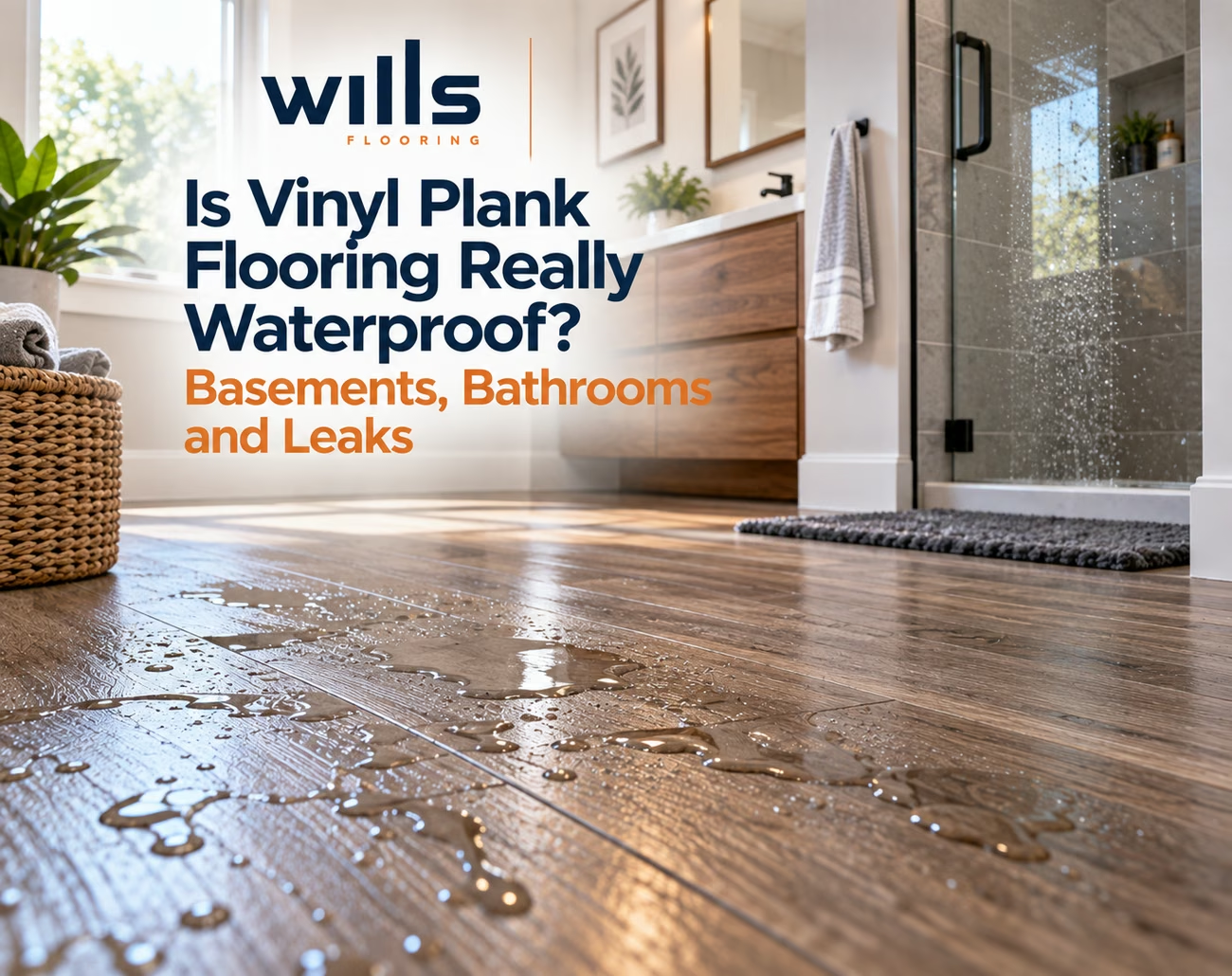
The plank is waterproof. The floor is not. Rigid-core vinyl plank will not swell, warp or stain from water sitting on it, but water still runs through the seams and the perimeter gap to whatever is underneath. That distinction decides everything about basements, bathrooms and leaks. In Seattle, where the questions usually involve a 1920s basement or a condo dishwasher, vinyl plank is still the best hard-surface answer, as long as you understand what it does and does not protect. Wills Flooring installs it for $2.50 per sq ft in labor.
A common Reddit thread goes: "Our washer hose let go, the LVP looks perfect, so we are fine, right?" Sometimes. The plank was fine; the plywood under it was soaked. The word waterproof on the box is true and also incomplete, and in a city as wet as Seattle that gap matters. Here is what the label means, where water actually goes, what we check before installing in a Ballard or Beacon Hill basement, and what happens after a real leak.
What waterproof means on the box
Rigid core
SPC and WPC vinyl plank
The core is stone-plastic or wood-plastic composite. Neither absorbs water, so a plank left in a bucket for a week comes out unchanged. This is what waterproof means: the material does not swell, delaminate or grow mold on its own. It says nothing about the joints between planks.
Glue-down
Flexible LVT
Thin, flexible vinyl tiles and planks glued to the subfloor. Also waterproof as a material, and because there is no air gap under them, less water reaches the subfloor. The trade-off is that a flooded glue-down floor usually has to be scrapped, because you cannot lift it to dry things out.
Not the same
Water-resistant laminate
Laminate has a wood-fiber core. Newer lines seal the edges and survive a spill for a day; they do not survive a leak. If a box says water-resistant instead of waterproof, that is the difference between a wiped-up spill and a wet subfloor.
Read it
The warranty fine print
Every waterproof warranty we have read covers the plank and excludes the subfloor, standing water beyond 24 to 72 hours, flooding and leaks from appliances. It protects you from a defective plank, not from a burst hose. Plan your installation as if the warranty did not exist.
Where the water actually goes
- A spill or a wet dogStays on top. Wipe it up within a few hours and nothing happens. This is the everyday case and vinyl plank wins it outright.Even a pet accident overnight is usually harmless if cleaned in the morning.
- Standing water for hoursSeeps through the click joints and the expansion gap at the walls. Plywood or OSB under it starts to swell; concrete traps water between slab and plank.A dishwasher that runs and leaks all cycle is enough.
- Days laterTrapped moisture under a floating floor has nowhere to dry. That is when the musty smell starts and when the subfloor edges cup and lift plank joints.The plank still looks fine, which is the trap.
- The floating-floor advantageClick-lock vinyl plank can be unclicked from the nearest wall, stacked, the subfloor dried with fans for a few days, and the same planks put back. A glue-down or a laminate cannot.We have done this after several Seattle water-heater failures.
Seattle basements: the slab decides
| What we find at the estimate | Vinyl plank? | What changes |
|---|---|---|
| Dry slab, no history of water | Yes | Standard install with an attached pad or a vapor-rated underlayment. |
| White powder (efflorescence) or dark patches | Yes, after testing | Moisture test first. Often fine with a 6 mil poly barrier under a floating floor. |
| Seasonal seepage at one wall in winter | Not yet | Fix the drainage, gutters or crack first. Vinyl plank will survive; the smell under it will not go away. |
| Old 9 in asbestos tile, sound and stuck down | Yes | Do not remove it. Floating vinyl plank over intact tile is an accepted way to encapsulate it. |
| Uneven slab, more than 3/16 in over 10 ft | Yes, after leveling | Self-leveling compound is quoted at the estimate. Rigid core telegraphs every hump. |
Basements in Ballard, Wallingford and Green Lake bungalows were not built to be living space. The slab is often thin and unsealed, so we test rather than assume.
Price your Seattle vinyl plank floor
Vinyl Plank Installation Calculator
Installation pricing from our published rate card. Material is quoted separately based on the plank you choose.
A 700 sq ft finished basement in a Wallingford home is 700 × $2.50 = $1,750 in installation labor, plus the plank you choose. Adding the 13 stairs down to it is 13 × $100 = $1,300. A 60 sq ft bathroom done on its own bills at the 500 sq ft minimum, so bathrooms make sense as part of a bigger job, not alone.
Bathrooms, kitchens and laundry rooms: the details that keep water out
- Silicone the wet perimeter. Along the tub, the shower curb and around the toilet flange we fill the expansion gap with 100 percent silicone instead of leaving it open under the trim. That is the main entry point for bath water.
- Put a pan under the washer. A washer supply line is the most common flood in Seattle condos and the one most likely to reach the unit below. A drain pan and braided hoses matter more than the floor.
- Keep seams away from the dishwasher. We lay out planks so a full-width plank sits under the dishwasher and fridge rather than a joint. Fewer seams where leaks start.
- Run the fan. Vinyl plank does not care about steam. Your drywall, cabinets and the subfloor edges do. A fan on a 20-minute timer protects everything the floor cannot.
- Condo rules first. Many Capitol Hill and Queen Anne buildings require a sound-rated underlayment. We pick a pad that meets the HOA number and still has a vapor rating.
After a real leak: what to do with a vinyl plank floor
Floating click-lock
Usually salvageable
- Lift planks from the nearest wall back to dry area
- Dry the subfloor with fans and a dehumidifier for 3 to 5 days
- Check plywood for swelling and mold; replace bad sheets
- Reinstall the same planks; a few damaged locking edges may need replacing from your leftover box
Glue-down or long soak
Usually replaced
- Glue-down planks tear when lifted and cannot be reused
- Water trapped more than a week means the subfloor is the problem, not the floor
- Concrete slabs need to dry back below the adhesive limit before anything goes down
- Insurance adjusters often approve replacement once the subfloor is involved
Keep a box: Always keep one unopened carton of your vinyl plank. Colors are discontinued every couple of years, and after a leak that spare box is the difference between a repair and a whole-room replacement.
Honest limits of waterproof vinyl plank
- Heat is a bigger enemy than water. South-facing Seattle windows and radiant heat over 85°F make planks expand and buckle. Waterproof is not heatproof.
- The subfloor still has to be flat and dry. A waterproof plank on a wet slab is a mold farm with a nice top. Moisture testing is not optional.
- It is not a moisture barrier for your house. If a basement leaks, fix the leak. Covering it with vinyl plank hides the evidence until the smell arrives.
- Some rooms still want tile. A curbless shower floor, a steam shower or a mudroom drain are tile jobs. Vinyl plank belongs everywhere else in the bathroom. See our vinyl plank installation page for what we include.
Waterproof vinyl plank questions from Seattle
Basements, condos and the occasional washer hose.
Can water get under vinyl plank flooring?
Is vinyl plank a good choice for a Seattle basement?
Does vinyl plank need to be sealed in a bathroom?
What happens to vinyl plank in a flood?
How much does it cost to install vinyl plank in a Seattle basement?
Get the slab tested before you buy planks
Free in-home estimate anywhere in Seattle. We moisture test the subfloor, bring rigid-core samples and give you a firm written price on the spot.
Wills Flooring serves Seattle, Everett, Sammamish, Lynnwood, Edmonds, Kirkland, Snohomish and the rest of Snohomish and King County from our Lynnwood showroom. See our vinyl plank flooring service, published price list, vinyl plank in bathrooms and laundry rooms, SPC vs WPC cores and vinyl plank in a wet climate.









.svg.svg)
.svg.svg)
.avif)